Daily Sports Pro
The scoreboard doesn’t lie, but it also doesn’t explain itself. Across the league this season, points are coming faster and in bigger numbers than fans have grown accustomed to, and the usual explanations — juiced equipment, softer schedules, a few hot shooting nights — don’t hold up under scrutiny. When analysts actually pulled the tracking data apart, the real story turned out to be tactical, not accidental.
What the Data Actually Shows
Start with shot selection. Teams across nearly every level of competition have quietly abandoned the low-value possessions coaches used to tolerate as “part of the game.” Contested mid-range attempts, predictable short-yardage runs into stacked fronts, forced looks from bad angles — those possessions are disappearing from the play-calling sheets. In their place are higher-percentage looks generated by movement, spacing, and disguised formations. Analysts describe it less as a shooting revolution and more as an efficiency purge.
The second driver is pace. Advanced tracking shows possessions are turning over faster, not because teams are rushing, but because they’re getting into their sets sooner and forcing defenses to declare coverage before they’re fully organized. A defense that hasn’t finished communicating is a defense that’s a step behind, and a step behind at this level is often the difference between a contested look and an open one.
Spacing, Tempo, and the New Math of Scoring
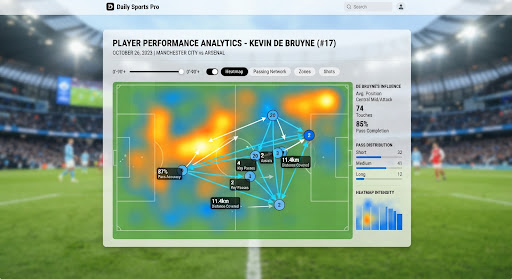
Coaches have always talked about spacing in the abstract. What’s changed is the ability to measure it. Player-tracking systems now generate a running picture of how much usable space an offense creates on a given play, and the correlation between that spacing metric and scoring efficiency has become one of the most reliable predictors analysts have found. Teams that stretch defenses in two directions at once are scoring at a materially higher clip than teams that stretch in just one.
That’s forced a philosophical shift in how rosters get built. Versatility is being valued over raw positional fit, because a player who can credibly threaten multiple areas of the field or floor is worth more to a spacing-driven system than a specialist who can only be effective in one spot. It’s a quieter kind of scoring surge — built on structural advantages that show up possession after possession rather than flashy individual highlights.
Defenses Are Adjusting Too
None of this is happening in a vacuum. Defensive coordinators have their own analytics departments, and the counter-adjustments are already showing up on film. Switch-heavy schemes, hybrid personnel groups, and disguised pre-snap looks are all attempts to take away the easy reads that spacing-based offenses rely on. Some of the league’s sharpest defensive minds argue the current scoring spike is really just the visible half of an arms race — offenses found an edge first, and defenses are now racing to close the gap.
That catch-up period is exactly why the numbers look so dramatic right now. Historically, these efficiency waves flatten out once the defensive side of the ball absorbs the new information and builds a systemic answer. Analysts who study these cycles closely tend to treat surges like this one as temporary imbalances rather than permanent shifts in how the game is scored.
What It Means Going Forward
For fans, the practical upshot is simple: the product on the field or court is faster, more open, and more rewarding to watch than it’s been in years. For front offices, the upshot is more complicated — every team now has to decide how much to lean into the new math and how much to hedge against the coming defensive correction.
What’s clear is that this isn’t a fluke season or a rules-driven anomaly. It’s the product of teams quantifying something coaches always knew intuitively and then building entire systems around it. Whether the surge holds or fades, the way front offices talk about scoring has already changed for good.